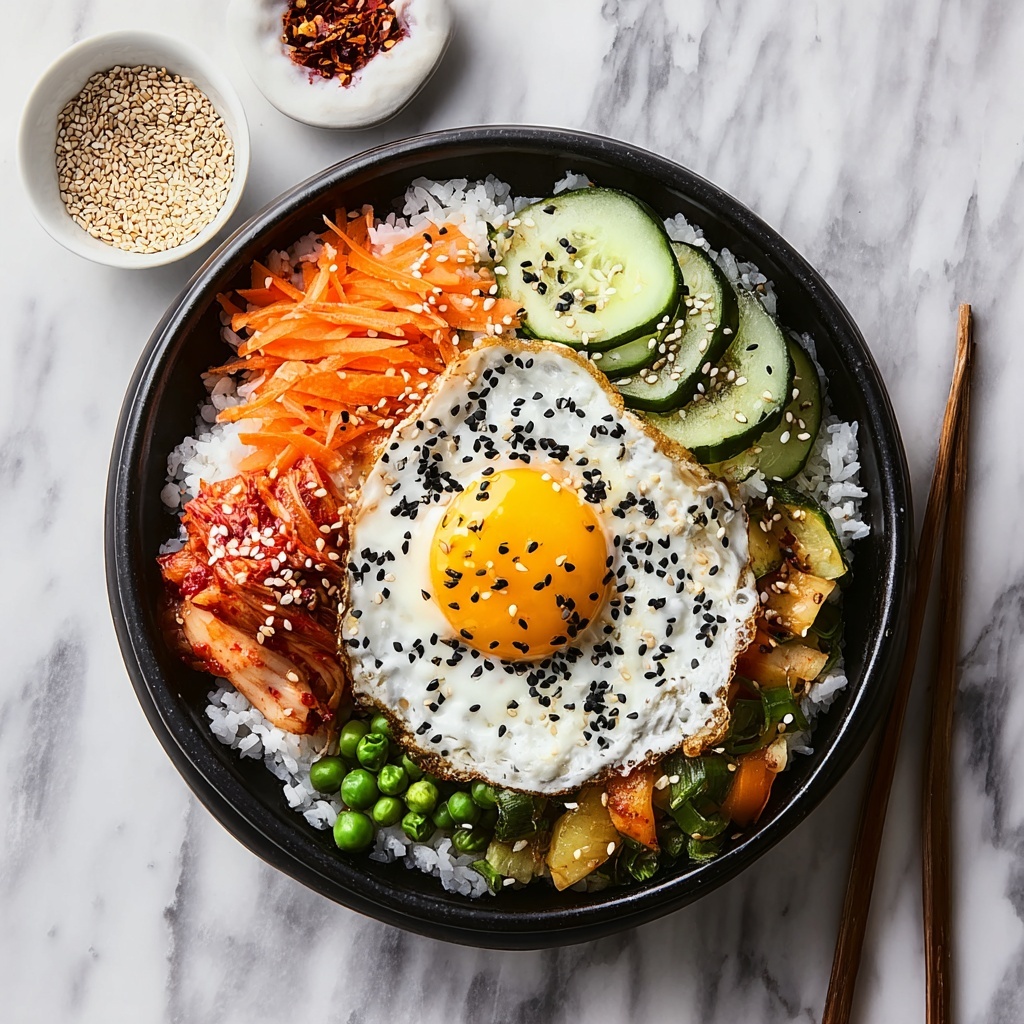
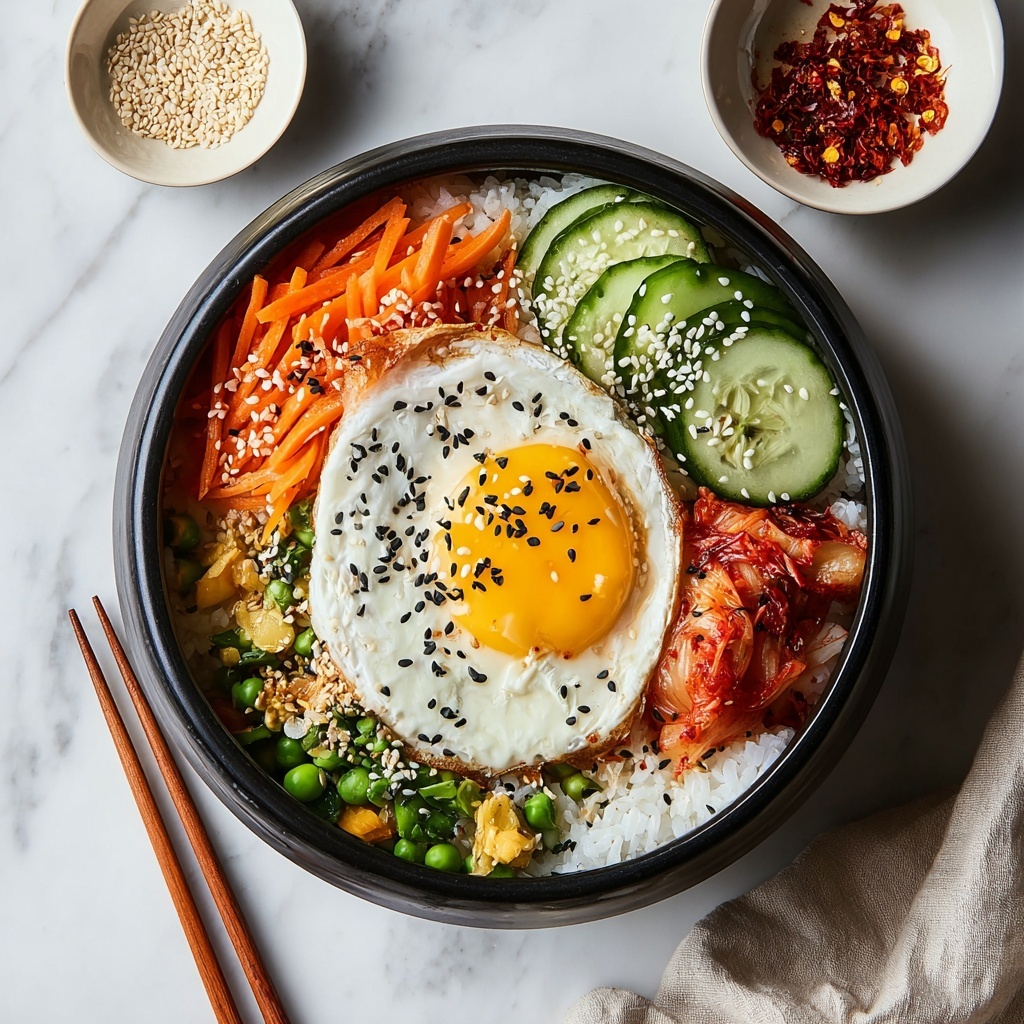
If you have never experienced the vibrant flavors of a Korean Bibimbap Recipe, get ready to fall in love with this harmonious bowl of textures and tastes. This classic Korean dish brings together perfectly cooked rice, fresh vegetables, savory mushrooms, and a sunny-side-up egg all crowned with a spicy-sweet gochujang sauce that wakes up every bite. It is a celebration of color, nutrition, and bold flavors, delivering an unforgettable meal that feels both hearty and wholesome. Whether new to Korean cuisine or a longtime fan, this recipe promises joyful cooking and an even more delightful eating experience.
Ingredients You’ll Need
The beauty of this Korean Bibimbap Recipe is in its simple yet essential ingredients. Each item adds a unique texture or flavor, from the creamy egg yolk to the crisp vegetables and the umami-packed mushrooms. This selection ensures your bibimbap is not just tasty but also a feast for the eyes.
- 2 cups cooked rice: A fluffy, slightly crispy base when stir-fried, key to soaking up all the sauces.
- 1 tablespoon sesame oil: Adds a deep, nutty aroma that is quintessential in Korean cooking.
- 1 teaspoon vegetable oil: Perfect for sautéing mushrooms without overpowering their flavor.
- 1/2 cup spinach, blanched: Provides a tender, slightly earthy green note and vibrant color.
- 1/2 cup bean sprouts, blanched: Brings crunch and fresh moisture to balance the dish.
- 1/2 cup shiitake mushrooms, sliced: Delivers rich, savory umami that elevates the bowl.
- 1/2 cup carrots, julienned: Adds sweetness and a crisp texture contrast.
- 1/2 cup cucumber, julienned: Offers cooling freshness to complement spicy elements.
- 2 large eggs: The crowning glory that brings creaminess once broken into the bowl.
- 2 tablespoons gochujang (Korean red pepper paste): The spicy-sweet sauce essential for authentic bibimbap zest.
- 1 tablespoon sesame seeds: Toasted to add a crunchy, nutty accent.
- 1 tablespoon soy sauce: Brings saltiness and depth to the sauce mix.
- 1 teaspoon garlic, minced: Infuses savory warmth, especially when sautéed with mushrooms.
- 1 teaspoon sugar: Balances the heat from gochujang with subtle sweetness.
- 1 tablespoon rice vinegar: Adds a mild tang that brightens the sauce flavor.
- 1 tablespoon olive oil: Helps meld the sauce ingredients smoothly.
- 1 tablespoon cooked beef (optional): A protein boost for those who enjoy meat, adding richness.
How to Make Korean Bibimbap Recipe
Step 1: Preparing the Rice
Begin by heating sesame oil in a medium pan over medium heat. Add the cooked rice and stir-fry it for 2 to 3 minutes until it’s slightly crisped. This step adds a delightful texture and nutty flavor to the base of your bibimbap.
Step 2: Cooking the Mushrooms and Garlic
Next, wipe the pan clean and add vegetable oil. Sauté your sliced shiitake mushrooms for 4 to 5 minutes until they soften and start releasing their moisture. Stir in the minced garlic and cook for an additional minute to bring out its aroma. Set the mixture aside — these mushrooms carry so much savory umami, they are essential.
Step 3: Handling the Eggs
In a small separate pan, lightly oil it and cook the eggs sunny-side up. The runny yolk will become the rich, natural sauce that ties the whole bowl together, so feel free to cook the eggs to your liking but leaving the yolk soft is ideal.
Step 4: Preparing the Vegetables
While the eggs cook, blanch the spinach and bean sprouts by briefly boiling them for about 1 minute. Drain thoroughly to avoid sogginess. Then prepare the carrots and cucumbers by julienning them into thin strips. These vibrant vegetables add freshness and crunch, balancing the richer elements of the dish.
Step 5: Making the Gochujang Sauce
Mix together gochujang, soy sauce, rice vinegar, sesame seeds, sugar, and olive oil in a small bowl until smooth. This sauce is the heartbeat of the Korean Bibimbap Recipe, delivering a perfect dance of heat, sweetness, and tang.
Step 6: Assembling the Bibimbap
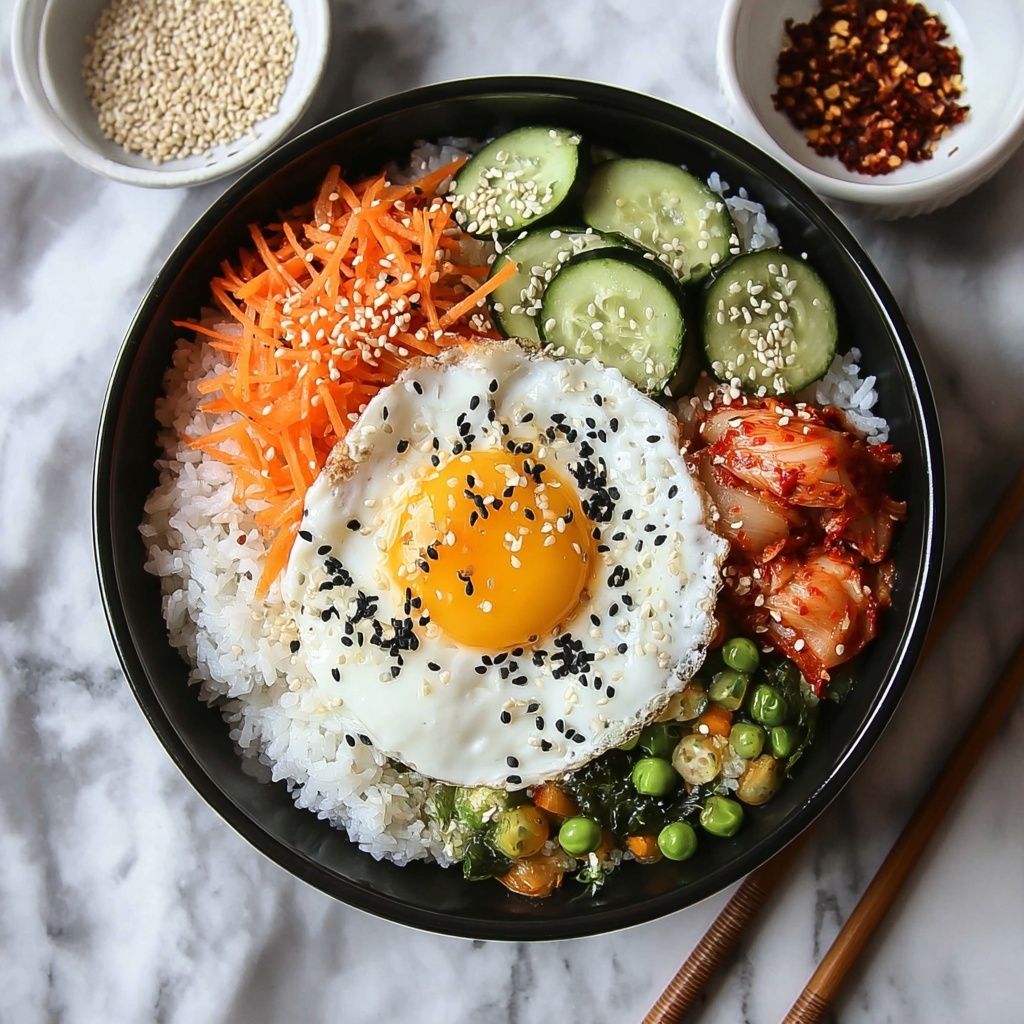
Start your beautiful bowl with the warm, crispy fried rice at the base. Arrange the spinach, bean sprouts, mushrooms, carrots, cucumber, and cooked beef if you’re using it, in neat sections on top. Crown the bowl with your fried egg and then drizzle the luscious gochujang sauce all over. Serve immediately and encourage mixing to combine all those amazing flavors before digging in.
How to Serve Korean Bibimbap Recipe
Garnishes
For an extra touch, sprinkle toasted sesame seeds or finely chopped scallions over the top. These little garnishes add a pleasant crunch and visual appeal, making your bibimbap feel like a festive occasion.
Side Dishes
Traditional Korean sides like kimchi or pickled radish pair beautifully by adding a tangy, fermented contrast that complements the bibimbap’s hearty and spicy elements perfectly.
Creative Ways to Present
Try presenting bibimbap in individual stone bowls if available, which retain heat longer and create a signature crispy rice crust at the bottom. You can also turn it into a fun wrap by placing ingredients in lettuce leaves for a fresh handheld variation.
Make Ahead and Storage
Storing Leftovers
Leftover bibimbap ingredients store well separately in airtight containers in the fridge for up to 2 days. Keep the rice, vegetables, and sauce apart to maintain textures and freshness.
Freezing
It’s best not to freeze bibimbap once assembled because the vegetables and egg don’t freeze well. Instead, freeze cooked rice and cooked beef separately if needed for future quick bibimbap creations.
Reheating
To reheat, warm the rice in a pan with a little sesame oil and add the vegetables warmed through gently or enjoy them cold if preferred. Reheat any cooked beef gently to avoid drying out. Add a freshly fried egg on top to recreate the original touch before serving.
FAQs
Can I make Korean Bibimbap Recipe vegetarian?
Absolutely! Simply omit the cooked beef and use tofu or extra mushrooms for protein. The variety of vegetables and the flavorful sauce keep it just as satisfying.
What can I substitute for gochujang?
Gochujang has a unique spicy-sweet flavor, but a mix of chili paste with a bit of honey or sugar and miso paste or soy sauce can create a decent substitute if it’s hard to find.
How spicy is Korean Bibimbap Recipe?
It can be as mild or spicy as you like depending on the amount of gochujang you add. Start with less if you prefer milder dishes and increase to your taste for that signature kick.
Is bibimbap healthy?
Yes, it features a great balance of protein, fresh vegetables, and carbs making it a well-rounded meal. It’s also colorful and nutrient dense, which is always a win.
Can I prepare bibimbap ahead of time for lunch?
You can prep the ingredients separately in advance. Assemble right before eating to keep the fresh textures and flavors intact, especially the eggs and sauce.
Final Thoughts
There is something truly special about making and sharing a Korean Bibimbap Recipe that invites warmth in every spoonful. It’s not just a dish but an experience loaded with fresh ingredients, bold sauces, and comforting textures. I hope this recipe inspires you to enjoy the vibrant flavors and get creative with your own bibimbap variations. Happy cooking and even happier eating!
Print
Korean Bibimbap Recipe
- Prep Time: 20 minutes
- Cook Time: 30 minutes
- Total Time: 50 minutes
- Yield: 2 servings
- Category: Main Dish
- Method: Stovetop
- Cuisine: Korean
- Diet: Halal
Description
Korean Bibimbap is a vibrant and flavorful mixed rice dish featuring a variety of vegetables, marinated beef (optional), a sunny-side-up egg, and a spicy gochujang sauce. This recipe combines stir-fried rice with blanched spinach, bean sprouts, sautéed shiitake mushrooms, fresh julienned carrots and cucumber, finished with a savory and tangy sauce that brings all the ingredients together for a delicious and nutritious meal.
Ingredients
Rice and Base
- 2 cups cooked rice
- 1 tablespoon sesame oil
- 1 teaspoon vegetable oil
Vegetables
- 1/2 cup spinach, blanched
- 1/2 cup bean sprouts, blanched
- 1/2 cup shiitake mushrooms, sliced
- 1/2 cup carrots, julienned
- 1/2 cup cucumber, julienned
Protein
- 2 large eggs
- 1 tablespoon cooked beef (optional)
Sauce and Seasoning
- 2 tablespoons gochujang (Korean red pepper paste)
- 1 tablespoon sesame seeds
- 1 tablespoon soy sauce
- 1 teaspoon garlic, minced
- 1 teaspoon sugar
- 1 tablespoon rice vinegar
- 1 tablespoon olive oil
Instructions
- Heat the pan and stir-fry rice: Heat a medium-sized pan over medium heat and add sesame oil. Once hot, add cooked rice and stir-fry for 2 to 3 minutes until lightly crisped. Remove rice and set aside.
- Cook mushrooms: In the same pan, add vegetable oil and heat. Add sliced shiitake mushrooms and cook for 4 to 5 minutes, stirring occasionally until softened. Add minced garlic and sauté for 1 more minute. Transfer mushrooms and garlic to a plate.
- Fry eggs: In a separate small pan, heat a little oil over medium-low heat and crack eggs in. Cook sunny-side up or to desired doneness.
- Blanch greens: Briefly boil spinach and bean sprouts for about 1 minute, then drain thoroughly and set aside separately.
- Prepare fresh vegetables: Julienne carrots and cucumber into thin strips and keep in separate bowls.
- Make the sauce: In a small bowl, combine gochujang, soy sauce, rice vinegar, sesame seeds, sugar, and olive oil. Mix well until smooth.
- Prepare beef (optional): Thinly slice cooked beef and set aside.
- Assemble bibimbap: Place stir-fried rice as the base in a large bowl. Arrange spinach, bean sprouts, shiitake mushrooms, carrots, cucumber, and cooked beef (if using) in sections on top of the rice. Add the fried egg on top.
- Add sauce and serve: Drizzle the gochujang sauce mixture over the assembled bowl. Serve immediately, mixing thoroughly before eating.
Notes
- Adjust the amount of gochujang sauce based on your spice preference.
- Vegetarian option: omit the cooked beef and use additional mushrooms or tofu for protein.
- You can prepare vegetables ahead of time to save prep time when assembling.
- For a healthier option, use brown rice instead of white rice.
- Make sure to drain blanched vegetables well to avoid watery bibimbap.