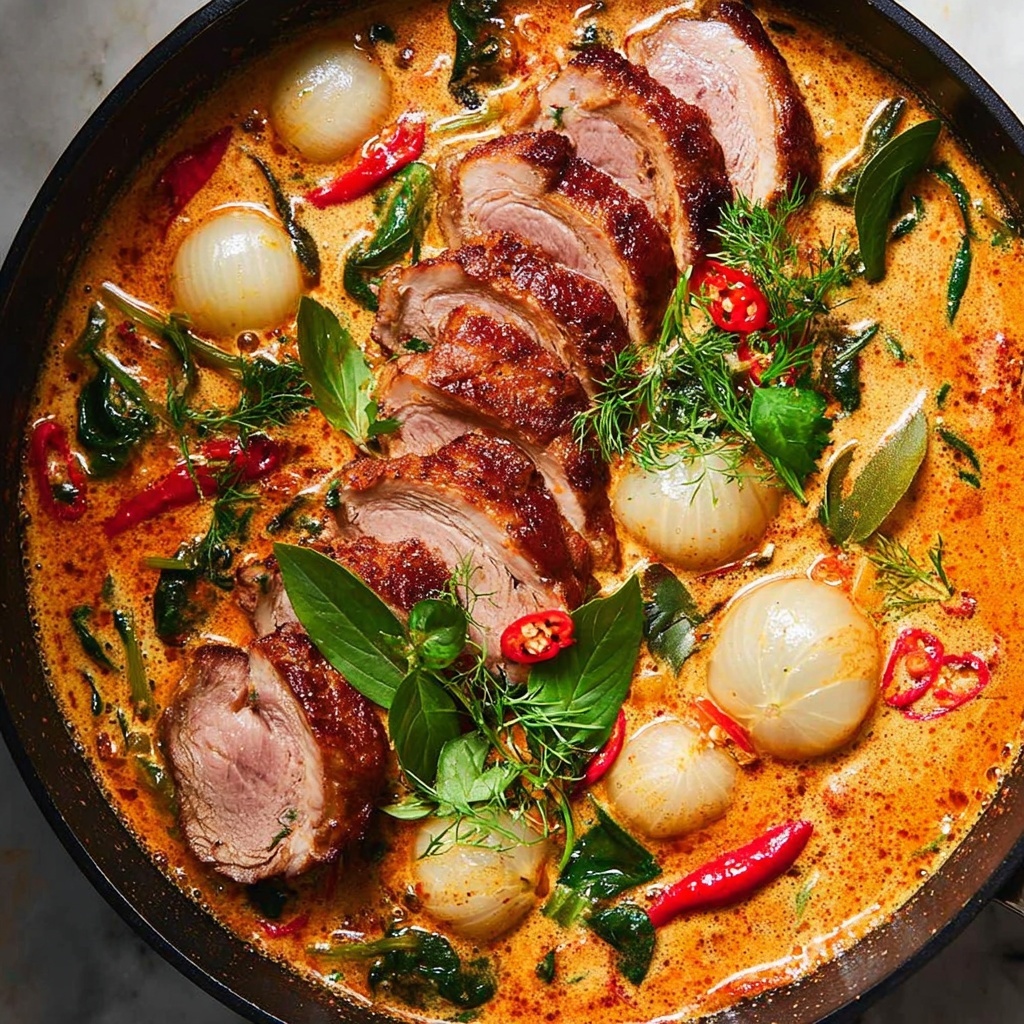
If you’re craving a dish that bursts with vibrant flavors and a little exotic flair, this Thai Red Duck Curry Recipe is exactly what you need in your life. Imagine tender duck breast simmered in a rich, creamy coconut curry infused with fragrant kaffir lime leaves, bright bursts of sweetness from lychees and pineapple, and the aromatic punch of Thai basil. It’s a harmonious dance of spice, sweet, and savory that feels both comforting and exciting. Whether it’s a weeknight dinner or an impressive dish for guests, this recipe brings the taste of Thailand right to your kitchen with simple, fresh ingredients and techniques anyone can master.
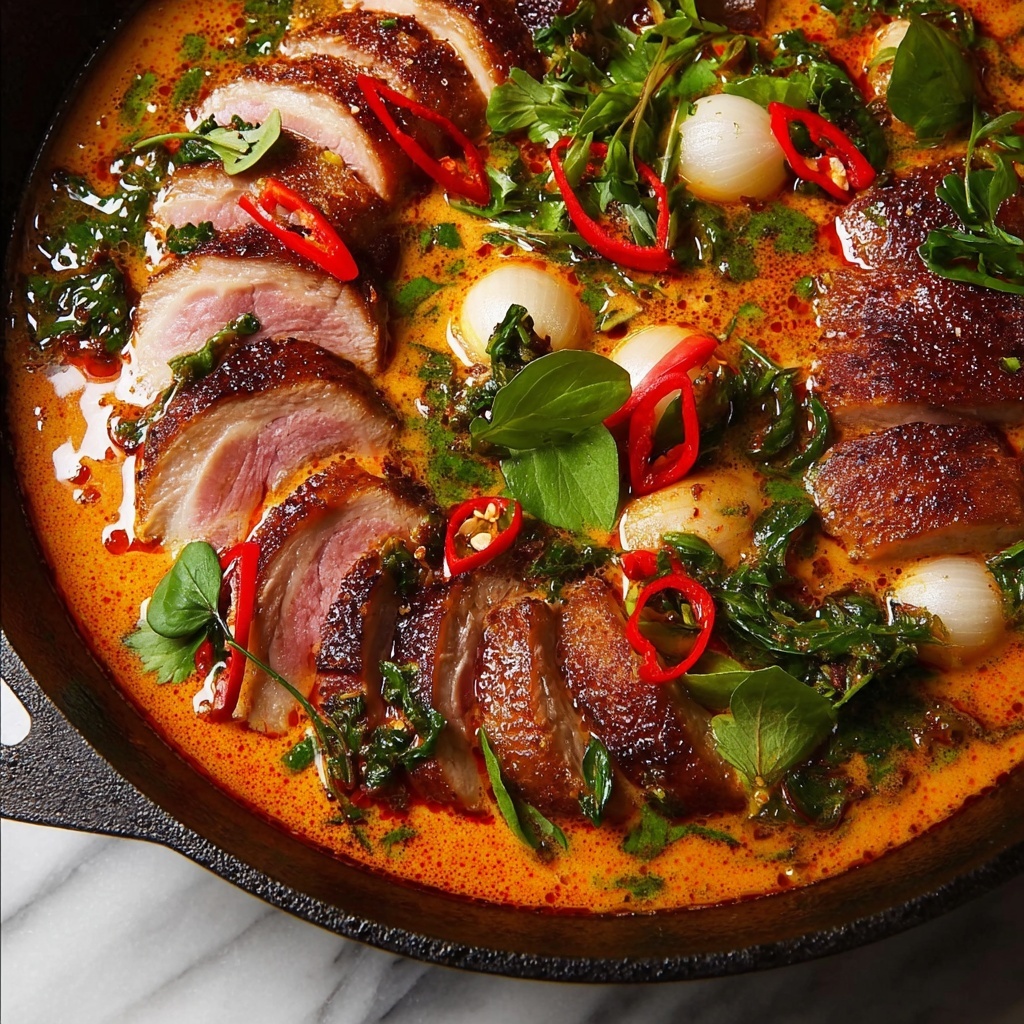
Ingredients You’ll Need
The beauty of this Thai Red Duck Curry Recipe lies in its straightforward ingredient list. Each component plays a vital role in building the layers of flavor, texture, and color that make this dish unforgettable. From the fatty richness of duck breast to the zesty brightness of lime leaves and the sweet chewiness of lychees, these ingredients come together effortlessly.
- Duck breasts (500g/1 lb, boneless, skin on, 3 pieces): The star protein that delivers rich, succulent flavor and crispy skin when seared properly.
- Cooking salt (1/4 tsp): Enhances all the natural flavors in the dish without overpowering them.
- White pepper (1/4 tsp): A gentle heat alternative to black pepper, complementing the curry’s spices.
- Thai red curry paste (115g/4 oz): The aromatic backbone packed with chili, lemongrass, and spices for that signature heat and complexity.
- Garlic cloves (2 large, finely grated): Adds pungent depth and rounds out the base of the curry.
- Fresh ginger (2 tsp, finely grated): Brings warmth and a peppery zing that lifts the entire curry.
- Chicken stock/broth (1 cup, low sodium): Creates a flavorful curry base without overshadowing other ingredients.
- Coconut milk (400ml/14 oz, full fat): Provides creamy richness essential to Thai curry, balancing the spice.
- Makrut lime leaves (6–8, crushed by hand): Infuses a citrusy fragrance that gives the curry its distinctive Thai aroma.
- White sugar (2 tsp): Balances the savory and spicy notes with a touch of sweetness.
- Fish sauce (2 tsp): Adds umami depth and authentic Thai saltiness.
- Green beans (120g/4 oz, trimmed and halved): Gives the dish a crisp texture and fresh, green flavor.
- Thai basil leaves (1 lightly packed cup): Offers a sweet, anise-like aroma contrasting the curry’s heat.
- Lychees (8–12 whole, peeled, seed removed): Introduces bursts of juicy, floral sweetness.
- Pineapple pieces (1 1/4 cups, preferably fresh): Adds tropical sweetness and a bit of acidity to brighten the dish.
- Jasmine rice (enough to cook 2 cups raw): The perfect neutral partner soaking up the luscious sauce.
- Extra Thai basil leaves: For garnishing and enhancing freshness.
- Coriander/cilantro leaves (optional): Adds herbal brightness as a garnish.
- Large red chili (optional, finely sliced): For those who love a little extra heat on top.
- Lime wedges (recommended): To squeeze over for a fresh, zesty finish.
How to Make Thai Red Duck Curry Recipe
Step 1: Prepare and Season the Duck
Start by patting the duck breasts dry and seasoning them evenly with cooking salt and white pepper. Letting the seasoning sit for a few minutes helps the flavors penetrate the meat, and drying the skin is key to getting that irresistible crispy finish when you cook them.
Step 2: Sear the Duck
Place the duck breasts skin-side down in a cold skillet and then heat to medium. This technique renders the fat slowly, crisping up the skin to perfection without burning. Once the skin is golden and crisp, flip and cook for a short additional minute or two just to seal in the juices. Remove from the pan and set aside.
Step 3: Build the Curry Base
Using the duck fat left in the pan, add the finely grated garlic and ginger, stirring for about a minute until fragrant. Then add the Thai red curry paste and cook it gently to release the depth of its spices. Pour in the chicken stock and stir to combine, letting the curry base simmer lightly to marry all those flavors.
Step 4: Add Coconut Milk and Flavorings
Pour in the full-fat coconut milk and toss in the crushed makrut lime leaves. Stir well and bring it all to a gentle simmer, then add the sugar and fish sauce to balance and deepen the taste. Return the duck breasts to the pan, spooning sauce over them and simmer gently for about 15 minutes to cook through and tenderize the meat.
Step 5: Add Vegetables and Fruits
About 5 minutes before the curry is done, stir in the green beans, lychees, and pineapple pieces. These introduce amazing textures and bursts of sweetness that contrast beautifully with the spicy curry. Allow everything to simmer until the green beans are just tender but still crisp.
Step 6: Finish with Fresh Herbs
Turn off the heat and fold in the fresh Thai basil leaves for an aromatic punch that ties the whole curry together. Let it rest for a few minutes to allow the flavors to meld perfectly.
How to Serve Thai Red Duck Curry Recipe
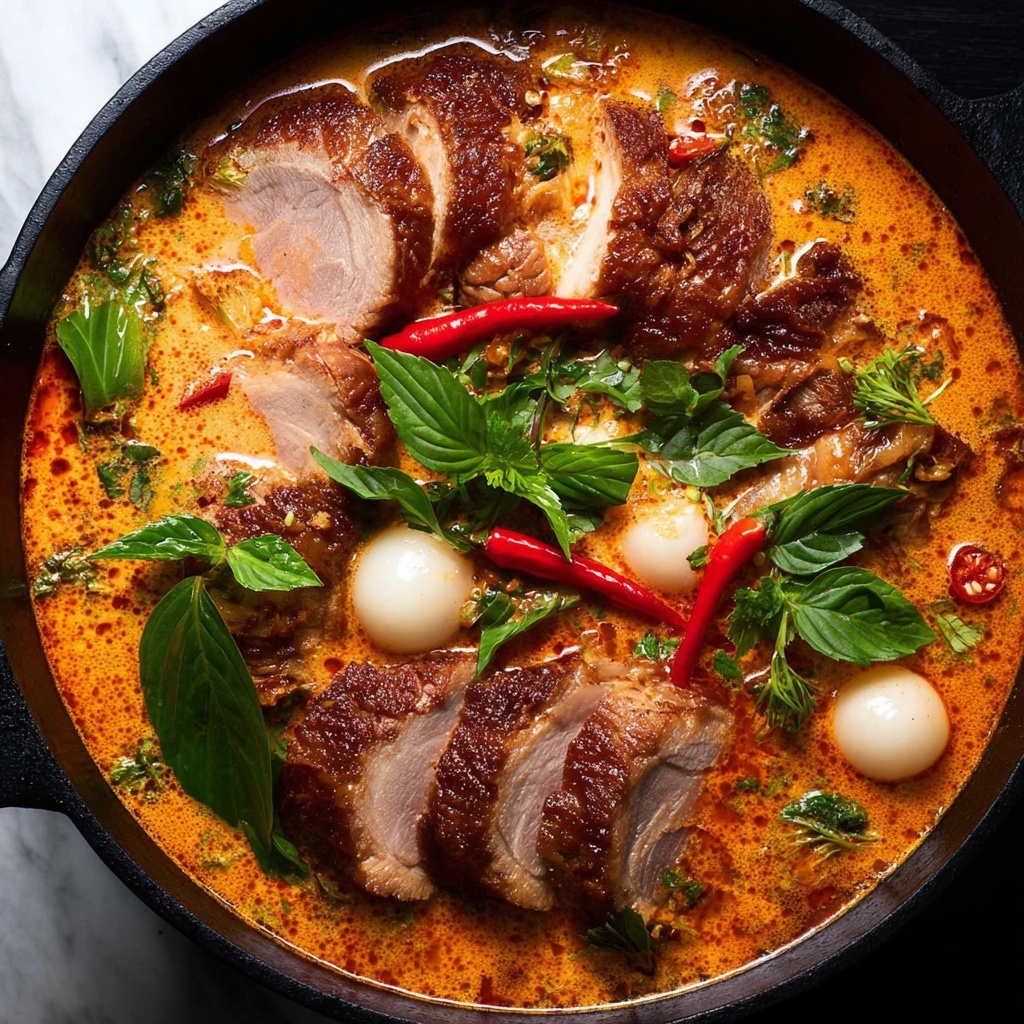
Garnishes
Extras like additional Thai basil leaves, a sprinkle of fresh coriander, and finely sliced red chilies add vibrant color and layers of flavor that make every bite exciting. A wedge of lime on the side is essential, as a squeeze of lime juice just before eating brightens and elevates the dish magnificently.
Side Dishes
This curry is best served with fluffy jasmine rice that soaks up all the luscious sauce. For a refreshing balance, you might also consider a crisp cucumber salad or simple steamed greens. These sides help balance the richness of the curry while rounding out the meal effortlessly.
Creative Ways to Present
Serve your Thai Red Duck Curry in a wide, shallow bowl to showcase the colorful layers of duck, fruit, and vegetables. Garnish with a chili rose or lightly toasted coconut flakes for a festive touch. Pair with a cold Thai iced tea or a crisp white wine for a restaurant-worthy experience at home.
Make Ahead and Storage
Storing Leftovers
Store any leftover curry in an airtight container in the refrigerator for up to 3 days. The flavors tend to deepen overnight, making it even tastier the next day, so planning ahead can be a real win.
Freezing
If you want to freeze the curry, it’s best to keep the duck sliced to avoid texture loss, then portion it into freezer-safe containers. It can be frozen for up to 2 months. Thaw overnight in the fridge before reheating gently.
Reheating
Reheat the curry gently on the stovetop over low heat to keep the duck tender and prevent the coconut milk from separating. Adding a splash of chicken stock can help restore the sauce’s consistency if it has thickened too much.
FAQs
Can I use duck legs instead of breasts?
Absolutely! Duck legs will take longer to cook and deliver a different texture, rich and fall-off-the-bone tender. Just adjust the cooking time accordingly to ensure they become perfectly tender in the curry.
What can I substitute for makrut lime leaves?
If you cannot find makrut lime leaves, add lime zest and a little lime juice to mimic the citrus aroma. It won’t be quite the same but will still lend a bright, fresh note.
Can I make this curry less spicy?
Yes! Use less Thai red curry paste and remove the chili garnish to tone down the heat. The coconut milk’s richness also helps mellow spiciness, so you can adjust to suit your palate.
Are canned lychees okay to use?
Canned lychees work just fine and are a convenient choice when fresh isn’t available. Just be sure to drain them well to avoid adding excess syrup to your curry.
Is there a vegetarian version of this curry?
You can swap the duck for hearty vegetables or tofu, and replace chicken stock with vegetable broth. The rest of the ingredients work just as beautifully for a vegetarian Thai red curry full of flavor.
Final Thoughts
This Thai Red Duck Curry Recipe is a delightful adventure in every bite – a dish that’s both indulgent and refreshing, complex yet simple to prepare. It’s the kind of recipe you’ll want to make again and again, whether for a special occasion or a cozy night in. So grab those ingredients, put on some music, and dive into making this exotic, comforting curry that’s sure to impress your friends and family.
Print
Thai Red Duck Curry Recipe
- Prep Time: 15 minutes
- Cook Time: 30 minutes
- Total Time: 45 minutes
- Yield: 4 to 5 servings
- Category: Main Course
- Method: Stovetop
- Cuisine: Thai
Description
This authentic Thai Red Duck Curry recipe combines tender, crispy-skinned duck breasts with a rich and fragrant red curry sauce made from traditional Thai red curry paste, coconut milk, and fresh herbs. Enhanced with the bright flavors of makrut lime leaves, lychees, pineapple, and Thai basil, this dish balances spicy, sweet, and savory notes perfectly. Served with fragrant jasmine rice, it’s a colorful and flavorful main course for 4 to 5 people.
Ingredients
Duck and Seasoning
- 500g/1 lb duck breasts, boneless, skin on (3 pieces)
- 1/4 tsp cooking salt or kosher salt
- 1/4 tsp white pepper (or finely ground black pepper as substitute)
Curry Paste and Aromatics
- 115g/4 oz (1/2 cup) Thai red curry paste
- 2 large garlic cloves, finely grated
- 2 tsp fresh ginger, finely grated
Liquids and Flavorings
- 1 cup low sodium chicken stock or broth
- 400ml/14 oz full-fat coconut milk
- 6 – 8 makrut lime leaves, crushed by hand
- 2 tsp white sugar
- 2 tsp fish sauce
Vegetables and Fruits
- 120g/4 oz green beans, trimmed and cut in half
- 1 lightly packed cup Thai basil leaves (substitute with regular basil if needed)
- 8 – 12 lychees, whole, peeled, seed removed (fresh preferred, canned acceptable)
- 1 1/4 cups pineapple pieces (fresh preferred, canned acceptable)
To Serve
- Jasmine rice (cook 2 cups of raw rice)
- Extra Thai basil leaves
- Coriander/cilantro leaves or small sprigs (optional)
- Large red chili, finely sliced (optional)
- Lime wedges (recommended)
Instructions
- Prepare the duck: Score the skin of the duck breasts in a crosshatch pattern to help render the fat and season with salt and white pepper. Set aside while you prepare other ingredients.
- Cook the duck: Heat a large skillet over medium-high heat. Place the duck breasts skin-side down and cook until the skin is golden brown and crisp, about 6-8 minutes. Flip and sear the other side for 2-3 minutes. Remove the duck from the pan and set aside to rest, then slice into bite-sized pieces.
- Make the curry base: In the same skillet, reduce heat to medium and add the Thai red curry paste. Fry the paste for 1-2 minutes until fragrant. Add the grated garlic and ginger, stirring constantly to avoid burning and cook for another minute.
- Add liquids and simmer: Pour in the chicken stock and stir to combine with the curry paste mixture. Add the coconut milk, crushed makrut lime leaves, white sugar, and fish sauce. Stir well and bring to a gentle simmer.
- Add vegetables and fruits: Add the green beans, pineapple pieces, and lychees to the curry. Simmer for about 5 minutes until green beans are tender but still vibrant.
- Finish the curry: Return sliced duck to the skillet and stir gently to combine. Add Thai basil leaves and cook for one more minute to release their aroma without wilting them too much.
- Serve: Spoon the curry over freshly cooked jasmine rice. Garnish with extra Thai basil, coriander leaves, finely sliced red chili, and lime wedges on the side for squeezing over right before eating.
Notes
- Note 1: Duck breasts with skin on give the curry a rich flavor and crispy texture when seared.
- Note 3: Freshly grated garlic and ginger elevate the curry’s aroma and flavor.
- Note 4: Full-fat coconut milk ensures the curry sauce is creamy and luscious.
- Note 5: Crushed makrut lime leaves add authentic citrus fragrance essential to Thai curries.
- Note 6: Thai basil leaves provide a distinctive, slightly spicy basil flavor that complements the curry well.
- Note 7: Lychees and pineapple add a unique sweet and tart contrast to the rich curry.
- Use fresh lychees and pineapple when available for the best texture and flavor, but canned versions are acceptable.
- Fresh lime wedges add a bright acidity that cuts through the rich curry flavors.
- If Thai basil is unavailable, use regular basil but the flavor will be milder.